

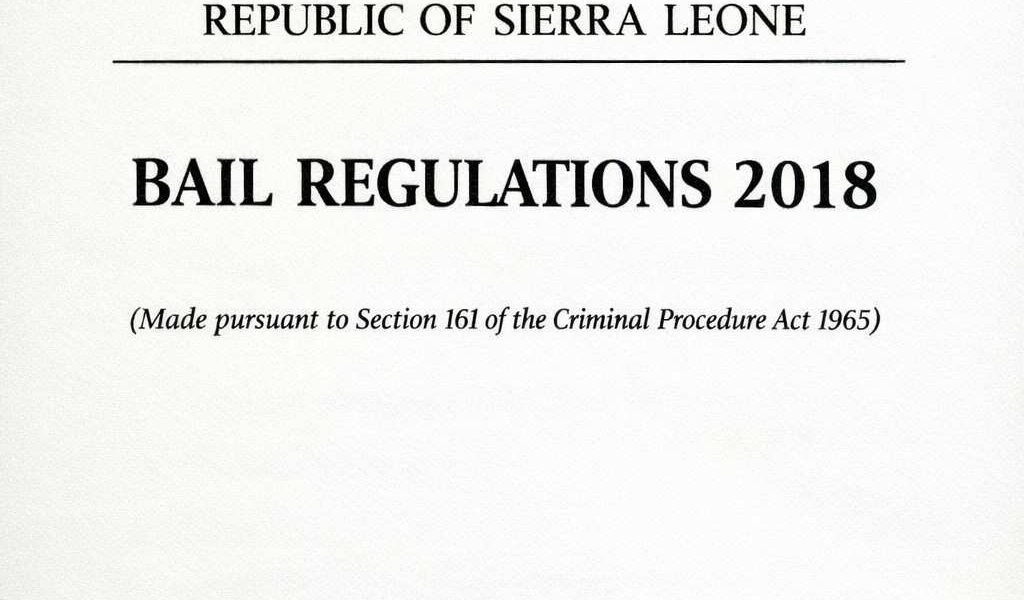
Learn about the Bail Regulations 2018 in Sierra Leone. Understand your rights, surety requirements, and how the law protects the ‘innocent until proven guilty’ principle.
Everything you need to know about bail conditions, surety requirements, and legal protections under the 2018 Regulations.
Navigating the legal system can be challenging. Whether you are a legal professional, a student, or someone seeking to understand your rights, the Bail Regulations, 2018 (Constitutional Instrument No. 5 of 2018) is a landmark document that governs how bail is handled in Sierra Leone.
This guide on Lanbuk.com provides a clear breakdown of the act, its purpose, and how it protects the fundamental principle of “innocent until proven guilty”.
What are the Bail Regulations 2018?
The Bail Regulations, 2018 were established to guide Judges, Magistrates, and police officers in applying the bail provisions of the Criminal Procedure Act 1965. Their primary goal is to ensure that pre-trial detention is a measure of last resort and that the rights of the accused are balanced with public interest.
Under these regulations, bail is defined as an agreement between a defendant, their surety, and the Court to ensure the defendant attends court as required.
Key Provisions and Your Rights
The 2018 Regulations introduced specific rules to make the bail process more transparent and fair. Here are the most important features:
Entitlement to Bail: Defendants are entitled to have their bail considered on every occasion they appear before a Court.
General Assessment Criteria: When granting bail, the court must consider four key factors: necessity, reasonability, proportionality, and enforceability.
Protection for Vulnerable Groups: The Court is required to consider alternatives to remand for specific individuals, including:
Children (under 18).
Pregnant women or lactating mothers.
Persons with physical or mental disabilities.
Primary caregivers and those who are severely ill.
Right to Reasons: If a court grants, denies, or varies bail conditions, it must give reasons and record the decision. Defendants are entitled to a copy of this record.
Rules Regarding Sureties and Security
A surety is someone who guarantees that a defendant will appear in court. The 2018 Regulations clarify what is required from them:
Who Can Be a Surety?
When choosing a surety, the Court looks at their profession, character, relationship to the defendant, and previous convictions. A Court cannot reject a surety unless they are deemed “unsuitable”.
Accepted Security Documents
To secure bail, the court may accept several types of documents, including:
Identity Cards: National ID, Voter ID, or NASSIT cards.
Travel Documents: Passports or other traveling papers.
Financial & Property Proof: Bank statements, title deeds, or proof of employment.
Community Support: Testimonials from Chiefs, Tribal Authorities, or community leaders.
When Can Bail Be Denied?
While the goal is to grant liberty, bail may be denied if there are “substantial grounds” for believing the defendant will:
Fail to appear in Court.
Commit another offence while on bail.
Interfere with witnesses or obstruct the course of justice.
Endanger national security or the safety of the public.
The Court also considers the seriousness of the offence, the defendant’s character, and their record with previous bail obligations.
Full Text of the Bail Regulations 2018
For legal practitioners and researchers, you can access the official document below:
Official Name: The Bail Regulations, 2018 (C.I. No. 5 of 2018).
Gazette Date: 12th July, 2018.
Authority: Rules of Court Committee, chaired by the Chief Justice.
Frequently Asked Questions (FAQ)
Q: Can a Magistrate impose any amount for money bail? A: No. The amount of money deposited shall not exceed the maximum fine a Magistrate is empowered to impose
Q: What happens if a defendant fails to show up? A: The Court will issue a bench warrant for their arrest, and any security or money provided may be forfeited.
Q: When is a surety released from their obligation? A: A surety is released if the defendant is acquitted, convicted, or discharged, or if the court grants a specific application for release.
Disclaimer: This information is for educational purposes and does not constitute legal advice. Always consult with a qualified legal practitioner for matters regarding Sierra Leonean law.